


Fluid Bed Dryer Manufacturers
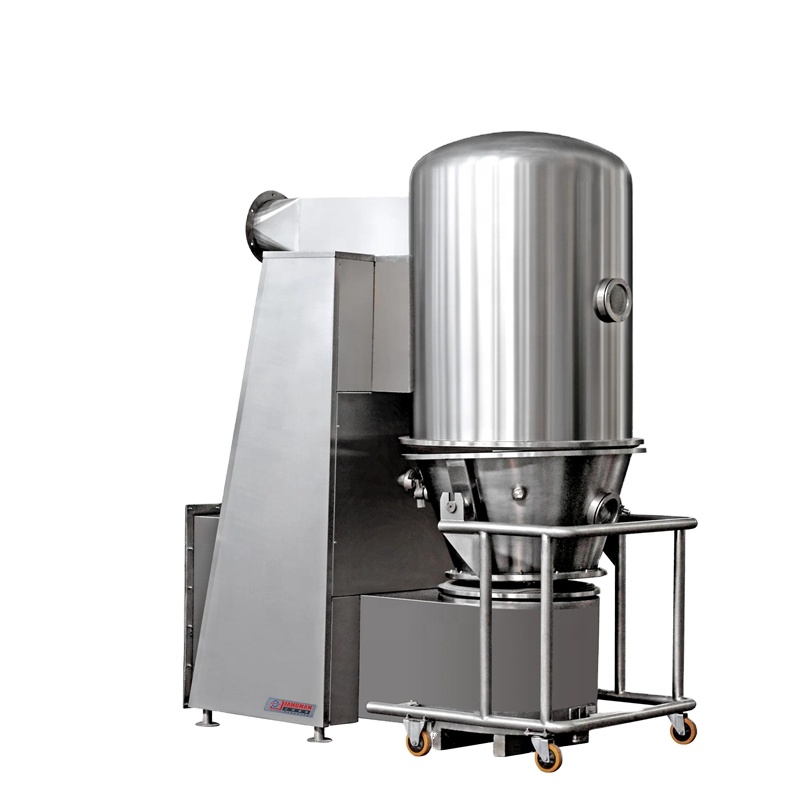
Fluid Bed Dryer is ideal for a wide range of both heat-sensitive and non-heat-sensitive products. It is suited for powders, granules, agglomerates, and pellets with an average particle size normally between 50 and 5,000 microns. It finds its application in chemical, pharmaceutical & biochemical, polymer, food & dairy industries.
At the bottom side of the dryer, there is a detachable vessel that is used for the material loading and unloading. Wet material is placed in a detachable vessel. The air is introduced from below through the prefilter, heated utilizing heaters installed therein. Simultaneously, the fan is also allowed to work. This air flows upward with high pressure through a perforated bottom of a vessel containing a bed of particulate solids or wet granules. The wet solids are lifted from the bottom and suspended in a stream of air (also known as a fluidized state). Heat transfer is accomplished by direct contact between the wet solid and hot gases. All the dried granules and materials are collected in the bag filter, which is provided on top of the vessel.
Fluid Bed Dryer Special Features
- Uniform processing conditions are achieved by passing a gas (usually air) through a product layer under controlled velocity conditions to create a fluidized state.
- Fluidization gives easy material transport and high rates of heat exchange at high thermal efficiency while preventing overheating of individual particles.
- Highly customizable with optional packages, suiting varied requirements of the clients.
Capacity Available: 10 kg to 300 kg
Frequently Asked Questions (FAQs) –
The right capacity depends on your batch size, hourly output, and material type. Manufacturers usually offer customized models from small lab scale to large industrial capacities.
Drying time depends on moisture content and material properties, but most batches dry faster compared to tray dryers due to high heat transfer efficiency.
Yes, it is widely used in pharmaceutical industries and can be designed as per GMP standards with stainless steel contact parts.
It typically requires electricity, a heating source (steam or electric), and proper airflow control for efficient operation.
The price depends on capacity, automation level, material of construction, and customization requirements. It is best to request a quotation based on your process needs.


