

Falling Film Evaporator
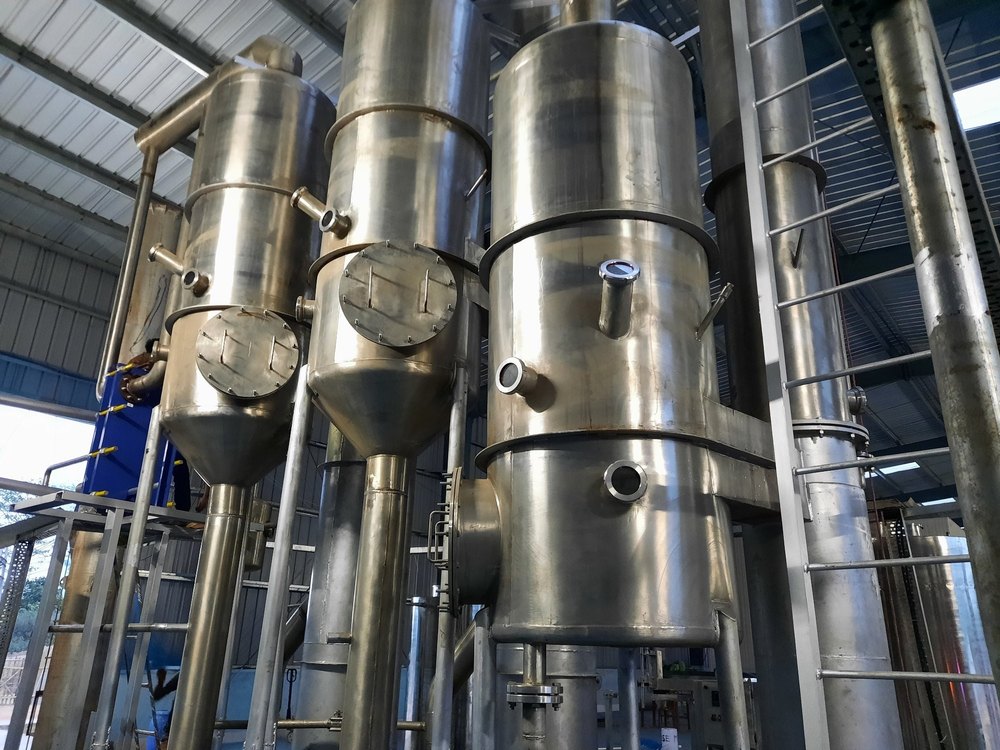
A falling film evaporators are used to concentrate solutions, especially with heat sensitive components. The liquid product usually enters the evaporator at the head of the evaporator. The product is evenly distributed into the heating tubes in such a way as to flow down the inside of the tube walls as a thin film. The liquid film starts to boil due to the external heating of the heating tubes and is partially evaporated as a result. The downward flow, caused initially by gravity, is enhanced by the parallel, downward flow of the vapor formed. This gravity-induced downward movement is increasingly augmented by the co-current vapor flow. The separation of the concentrated product from its vapor happens in the lower part of the heat exchanger and the separator.
Features:
- Simple in operation
- Suitable for heat sensitive products
- Requires lower circulation rates
- Liquid distributor is designed in such that way that equally distribution of liquid in tubes.
Applications
- Food Industry – Milk, Coffee, Soy Milk, Apple Juice, Tea Extract etc
- Chemical Industry
- Dye Intermediates
- Distillery waste water effluent with low TSS
Key Features of Our Falling Film Evaporator
- Simple in operation
- Suitable for heat sensitive products
- Requires lower circulation rates
- Liquid distributor is designed in such that way that equally distribution of liquid in tubes
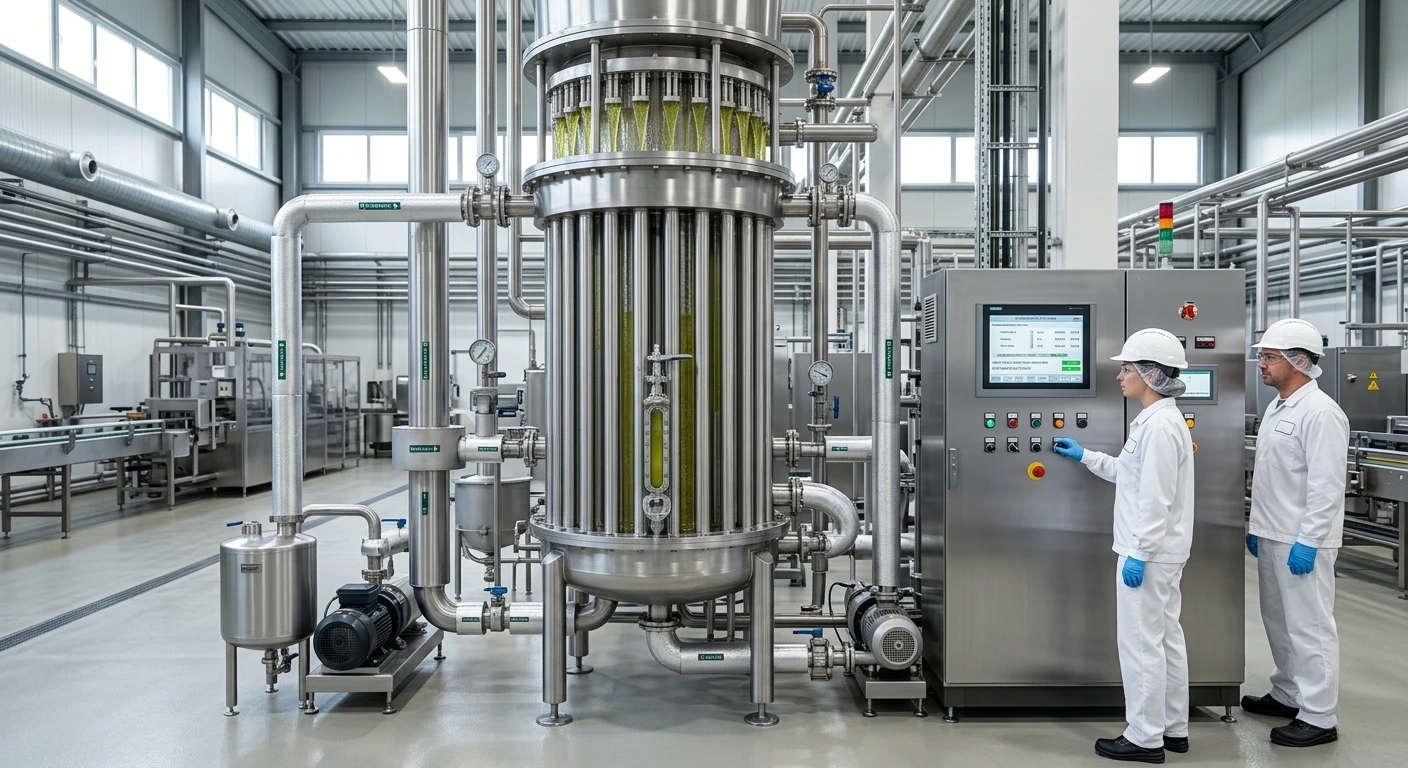
Applications
Used in food processing, chemical production, dye intermediate manufacturing, and distillery wastewater treatment for efficient heating and temperature control.
Food Industry
Efficient heating solution for processing milk, coffee, soy milk, apple juice, and tea extract while maintaining quality and hygiene.
Chemical Industry
Provides controlled heating for chemical reactions and industrial processing, improving energy efficiency and production reliability.
Dye Intermediates
Maintains precise temperature control required for efficient dye intermediate manufacturing and consistent product quality.
Distillery waste water effluent with low TSS
Helps in heating and treatment processes for efficient distillery wastewater management and recycling operations.
Working Principle of Falling Film Evaporator
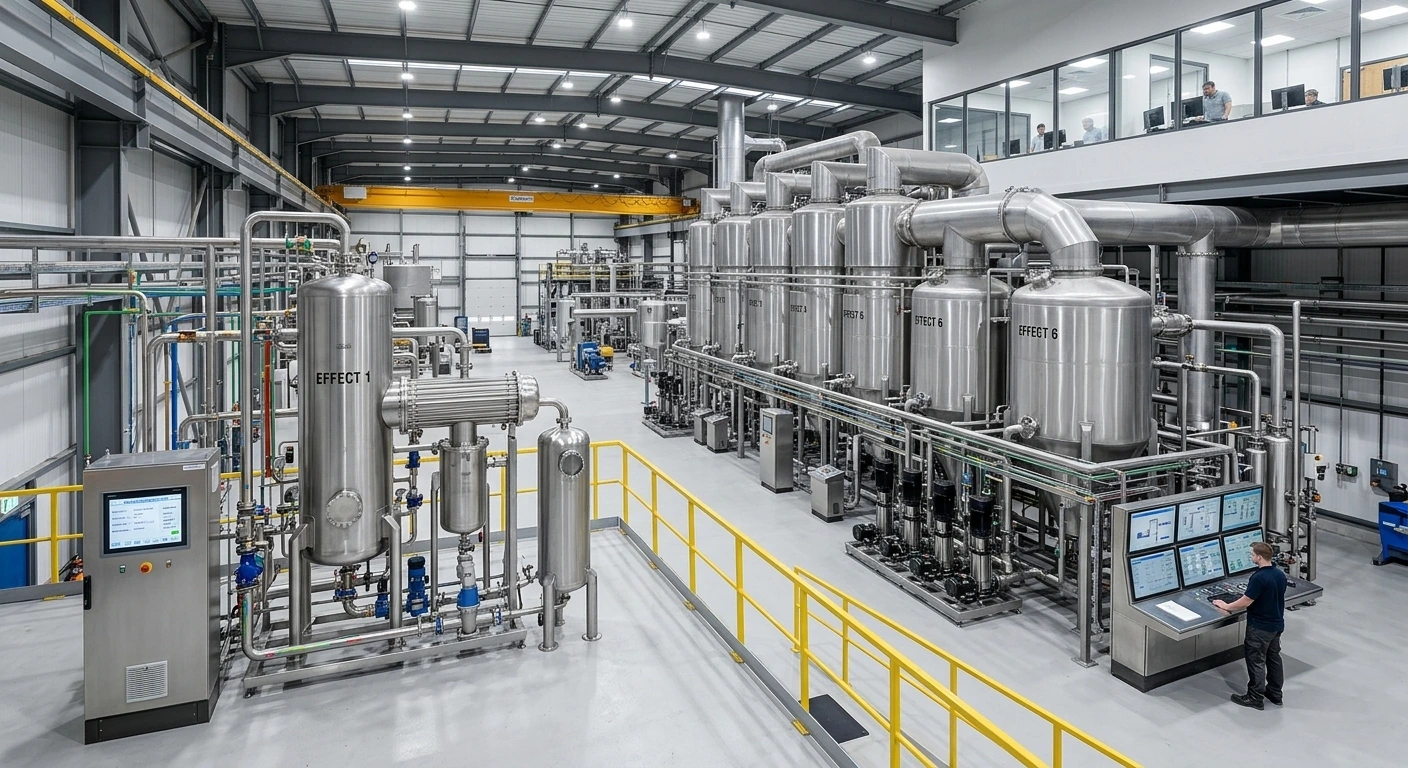
A Falling Film Evaporator works by distributing the liquid feed evenly at the top of vertical heating tubes. The liquid flows downward along the inner walls of the tubes as a thin film due to gravity. Steam or another heating medium heats the outer surface of the tubes, causing the liquid film to evaporate quickly.
As the liquid moves downward, vapor is formed and flows along with the liquid. At the bottom of the evaporator, the vapor is separated from the concentrated liquid in a separator. This process allows fast evaporation with minimal heat exposure, making it ideal for heat-sensitive products.
Benefits of Falling Film Evaporator Equipment
Here are key benefits based on the Falling Film Evaporator process:
- Ideal for Heat-Sensitive Products
- High Energy Efficiency
- Fast Evaporation Process
- Improved Product Quality
- Continuous and Stable Operation
- Suitable for Various Industries
Why Choose Our Falling Film Evaporator
Choosing the appropriate manufacturer of evaporators will provide efficiency and reliability of its operation in the long term.

Refined manufacturing technology

Customized evaporation solutions

High-quality corrosion-resistant materials

Energy-efficient system configuration

Reliable technical support and service
Our systems are very reliable in matters of industrial processes that need precision, durability, and performance.
Frequently Asked Questions (FAQs) –
A Falling Film Evaporator is an industrial evaporator where liquid flows down as a thin film over heated tubes to efficiently concentrate solutions, especially heat-sensitive products.
Liquid feed is evenly distributed at the top, flows down the tube walls, vaporizes due to external heating, and the concentrated liquid and vapor separate at the bottom.
It is used in food, dairy, juice, chemical and wastewater industries to concentrate liquids without degrading heat-sensitive components.
It offers simple operation, low circulation requirements, energy efficiency, and gentle processing for heat-sensitive materials.
Yes, because it causes minimal thermal degradation due to short liquid residence time under controlled temperatures.